Geometry Delta Audit
Comprehensive parametric comparison between baseline CAD models and requested modifications to identify affected features.
Initial 3D deviation heat map and parametric scope matrix sign-off.

Explore engineering cases about interfaces, drawings, BOMs, manufacturing context, purchasing, and downstream change review.
A seemingly trivial 2 mm dimensional shift in a parametric model takes 3 seconds in CAD, yet triggers a cascading multi-departmental chain reaction across tooling, documentation, and suppliers.
Modifying the primary boss hole diameter from Ø14 mm to Ø12 mm inside the parametric CAD tree resolved a local stress concentration, taking less than five minutes of designer time.
When a single CAD dimension shifts, the consequence propagates far beyond the parametric tree. Explore how a localized geometric edit reverberates across the entire production and lifecycle stack.
Modifications to sketches, feature extrusions, fillet radii, or hole centerlines. A change as small as 2 mm alters mass properties, center of gravity, stress concentrations, and finite element boundary conditions.
Mating constraints, clearance envelopes, fastener engagement depths, and dynamic mechanism limits. Unchecked geometric offsets frequently cause silent assembly interference and binding in adjacent sub-assemblies.
Dangling dimensions, out-of-date GD&T datum references, section cut realignments, and revision block incrementation. Automatic drawing updates often conceal altered inspection datum planes.
Part number revisions, interchangeability rules (Form-Fit-Function), parent assembly roll-ups, and ERP synchronization. Failure to re-index revision codes results in obsolete parts mixed with updated inventory.
CAM toolpaths, CNC post-processors, injection mold cavity modifications, sheet metal bending brake setups, and custom welding fixtures. Unplanned tooling re-cuts cause immediate plant floor downtime.
Supplier contract renegotiations, minimum order quantity (MOQ) re-evaluations, scrap disposition of existing stock, and lead time recalibration for custom raw stock or non-standard fasteners.
Standard operating procedures (SOPs), shop floor assembly work instructions, field service manuals, safety certification dossiers, and regulatory compliance records under strict ISO guidelines.
Applying systematic engineering change orders (ECO) prevents hidden downstream assembly failures and saves up to 40% in rework costs during initial batch manufacturing.
A rigorous four-stage framework designed to audit geometry deviations, propagate revisions across downstream assemblies, and ensure flawless technical compliance.
Comprehensive parametric comparison between baseline CAD models and requested modifications to identify affected features.
Initial 3D deviation heat map and parametric scope matrix sign-off.

Tracing multi-level subassemblies, kinematic constraints, mating interfaces, and clearance limits across related parts.
Assembly clash detection log and dependent components impact summary.
Synchronizing 2D engineering drafting sheets, GD&T tolerance stacks, and digital Bill of Materials with revised geometry.
Revised ISO-compliant drafting package and synchronized itemized BOM.
Publishing finalized change orders, CAM toolpath validation protocols, and archive-ready neutral CAD exchange files.
Complete Engineering Change Notice (ECN) dossier and release certification.
To map the ripple effects of engineering modifications accurately, our research and auditing workflow requires structured CAD datasets, clear revision histories, and defined tolerance boundaries prior to initiating the review.
Clean master feature trees, parametric constraint logic, and unbroken sketch relations representing the certified revision state prior to modification.
Top-level assembly architecture specifying mate connectors, mechanical interface limits, and adjacent subassembly clearance boundaries.
Synchronized Multi-Level Bill of Materials alongside Engineering Change Notices (ECN/ECO) detailing prior revision rationale.
Explicit dimensional tolerance expectations, datum reference frames, and critical-to-quality (CTQ) surface finish requirements.
Select the items your engineering team has prepared to confirm your dataset readiness before submitting inquiry materials.
Moderate readiness: Model data present, BOM and tolerance baseline required.
Detailed technical breakdowns of parametric feature updates, API shifts, and geometric kernel modifications.
Architectural evaluation of automated geometry cleanup and neural drawing reconstruction routines.
Review of sheet metal stamping algorithms, multi-body fillet continuity, and upstream change propagation across complex assemblies.
Performance metrics for large-scale multi-component assemblies and cloud compute pipeline latency.
Examining adaptive CAM roughing routines, multi-user workspace merges, and persistent drawing associativity across parametric revisions.
Detailed retrospective reviews examining how geometric shifts, tolerance modifications, and revision controls propagate across drawings, tooling, and final assembly lines.
How programmatic parametric modeling and aerodynamic contour automation streamline complex turbomachinery development pipelines.
Strategic implications for enterprise PLM synchronization, cloud CAD pipelines, and multi-CAD data interoperability.
Systematic reconciliation of item master tables and real-time Bill of Materials synchronization during rapid product redesigns.
Rigorous frameworks for revision management, drawing integrity, and compliance across complex engineering pipelines.
Quality Standards
An exhaustive breakdown of structural updates, digital verification directives, and document governance requirements for high-precision manufacturing.
API & Scripting
Evaluating automated drawing generator plugins, backward compatibility challenges, and .NET runtime refactoring strategies in modern CAD stacks.
Drafting Standards
An in-depth breakdown of standardized layering systems, dynamic annotation rules, and cross-platform drafting conventions shaping US project deliveries.
Data Workflows
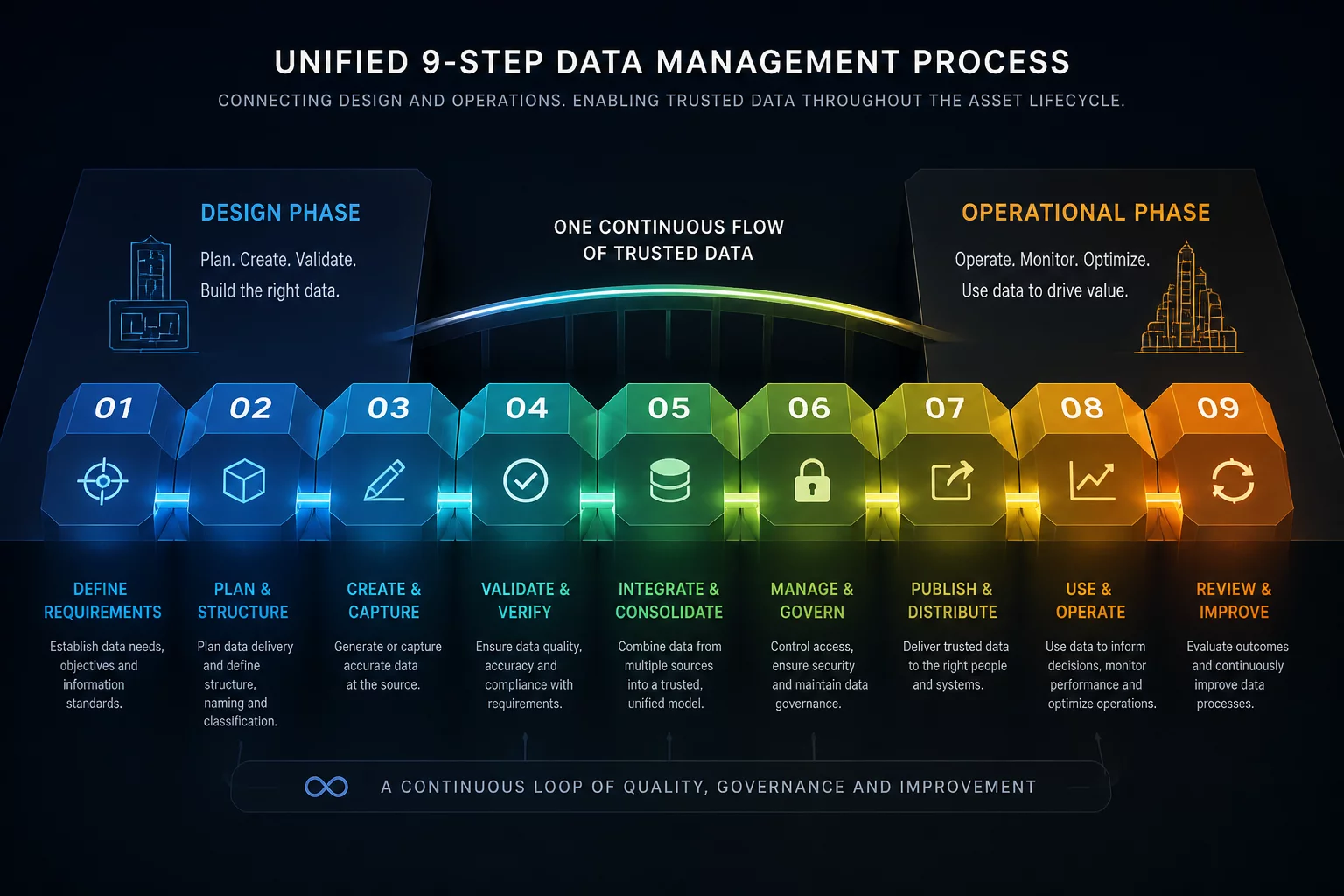
Key impacts of the proposed 9-step data lifecycle protocol on engineering drawing deliverables, approval gateways, and model provenance.
Cloud CAD ecosystems handle modeling, real-time collaboration, and revision trees. ChangeRipple Journal delivers independent educational analyses to examine what happens downstream when parameters evolve.
The active modeling suite maintains the single source of geometry, version history, and release approvals. It manages authoritative state changes through automated revision trees.
Our independent publication deconstructs the physical, financial, and organizational ripples that occur downstream when dimensions or fastener standards are modified.