Analysis Contents
01 Strategic Shift in Information Management
The British Standards Institution (BSI) has formally unveiled the Draft International Standard ISO/DIS 19650:2026, marking a decisive evolution in how digital data is handled throughout the entire lifecycle of built assets. This revision integrates lessons learned from widespread global adoption of the 2018 edition, addressing long-standing fragmentation across project delivery phases and ongoing facility management operations.
Engineering teams often encounter severe information loss during handovers between capital project stages and operational readiness. The 2026 draft bridges this exact gap by standardizing the digital information container metadata and mandating stricter exchange protocols across heterogeneous Common Data Environments (CDE).
Key Public Consultation Window
National standards bodies and industry stakeholders have an open window until late 2026 to review the draft text, propose technical amendments, and evaluate validation clauses before the standard advances to the Final Draft International Standard (FDIS) ballot.
02 Core Revisions in the DIS Framework
The ISO/DIS 19650:2026 update introduces comprehensive refinements across project requirements, execution protocols, and verification checkpoints:
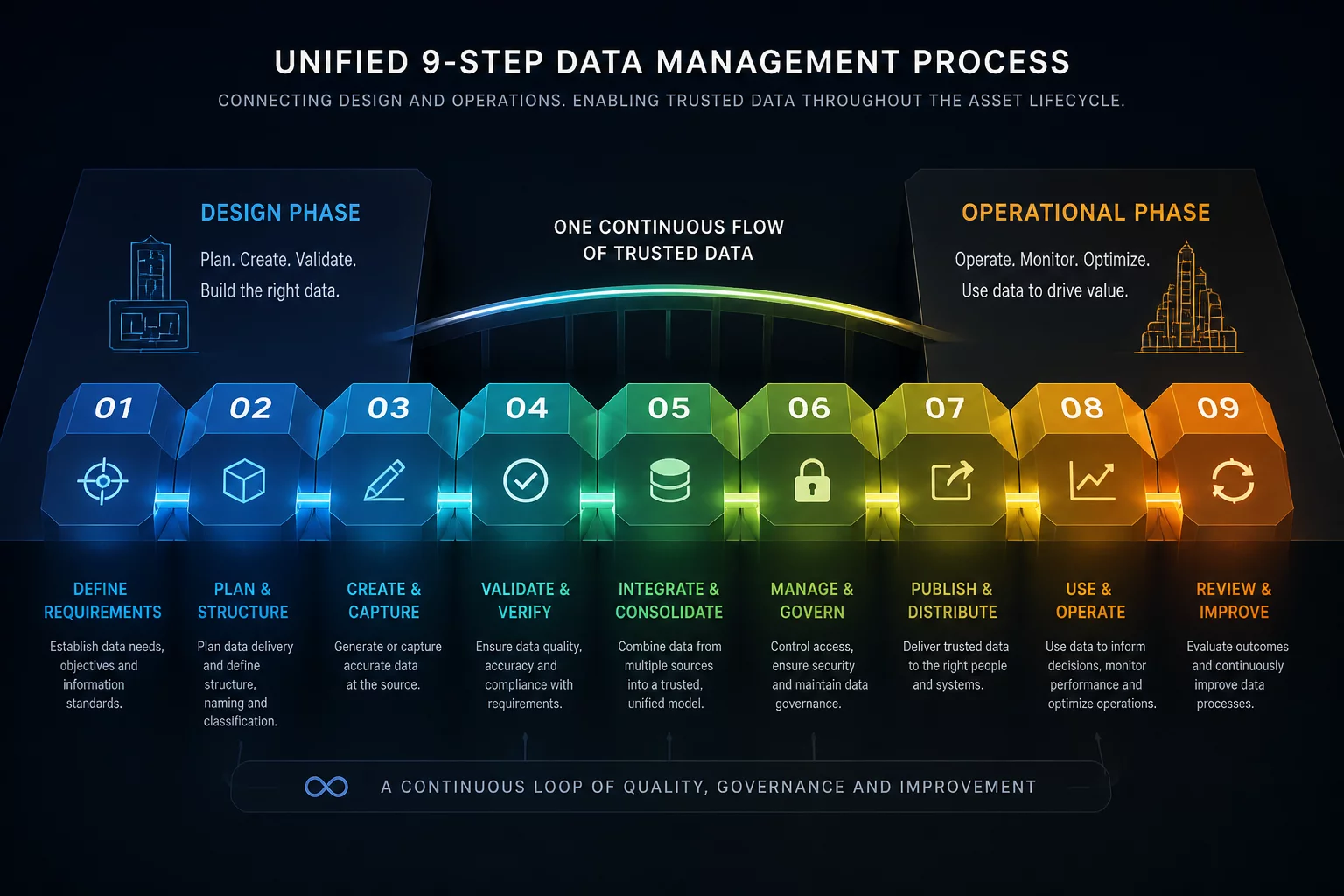
- Unified 9-Step Process: Consolidates design-stage appointments and operational handovers into a single continuous delivery workflow.
- Standardized Metadata Schema: Establishes machine-readable metadata tags to prevent container corruption across cloud storage boundaries.
- Automated Level of Information Need: Integrates EN 17412-1 compliance rules directly into tender specifications and deliverables verification.
- Enhanced Security Provisions: Aligns digital asset access controls with updated ISO/IEC 27001 parameters for critical infrastructure protection.
By eliminating ambiguous nomenclature and standardizing the schema for Information Delivery Plans (IDP), engineering teams can resolve scope overlaps before model authoring begins.
03 Implementation Roadmap & Industry Impact
Contractors, lead appointed parties, and asset owners must begin preparing their operational manuals for these impending changes. Early alignment with the draft guidelines allows engineering firms to test metadata automation tools, audit CDE interoperability matrices, and streamline supply chain compliance.
Adopting the draft standard during the consultation phase mitigates downstream retrofitting costs and ensures robust compatibility when national annexes are updated worldwide.
06 Technical Comments & Review
Peer review observations and engineering methodology inquiries.
No comments yet. Be the first to leave a comment.
Leave a Comment
Join the discussion with other CAD specialists and design engineers.