Summary of Consultation Topics
01 Clarifying Operational Phase Information Requirements (OIR and AIR)
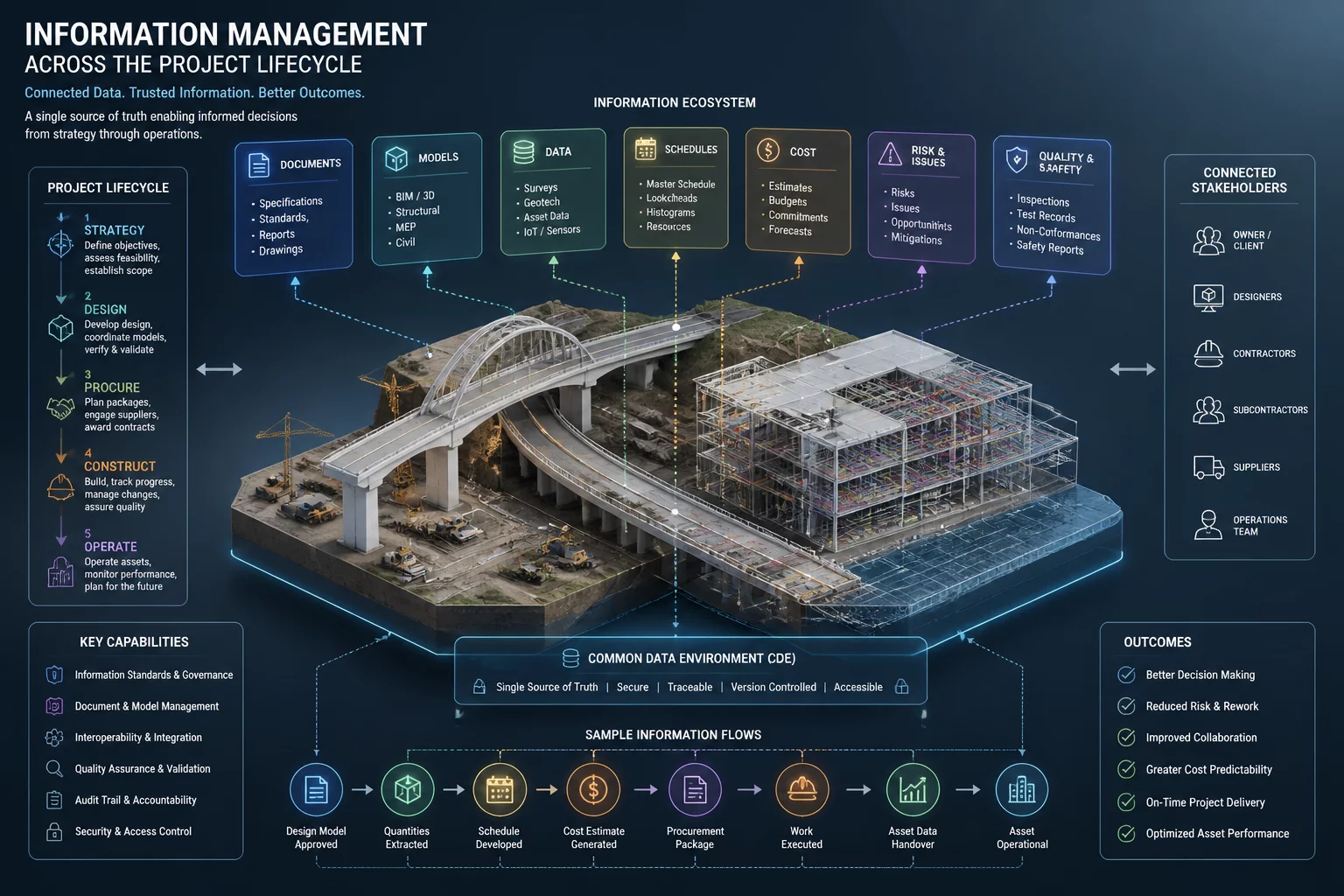
The international public consultation for ISO 19650-3:2026 has concluded, drawing rigorous commentary from standard bodies, engineering firms, and facility management organizations worldwide. Part 3 governs the information management process during the operational phase of assets, establishing explicit responsibilities between asset owners, appointing parties, and lead appointed parties. The revisions emphasize eliminating ambiguity when translating Organizational Information Requirements (OIR) into Asset Information Requirements (AIR), ensuring downstream operational systems receive structured data rather than disjointed CAD files.
During the multi-month review window, technical committees resolved hundreds of granular inquiries regarding trigger events and unplanned asset maintenance cycles. The revised standard standardizes data capture intervals so that any physical modification on the facility floor triggers an immediate, verifiable update within the Asset Information Model (AIM). This mechanism bridges the chronic disconnect where operational CAD revisions lag behind real-world equipment retrofits.
Core Shift in Part 3 Governance
The updated ISO 19650-3 drafts establish that all asset information handover milestones must use non-proprietary schema mapping alongside native CAD data, guaranteeing 20+ year accessibility for operations and asset management platforms without vendor lock-in.
02 Resolving Delivery Handover Bottlenecks and CDE States
Handover between project delivery (governed under ISO 19650-2) and operational facility upkeep has long represented a primary source of data degradation in built environments. The newly synthesized consultation feedback establishes a streamlined 4-stage validation workflow:
- Automated Common Data Environment (CDE) Transition: Clear state transitions from Work in Progress (WIP) and Shared into the operational AIM archive without loss of parametric metadata.
- Standardized Trigger Event Protocols: Explicit procedures detailing how emergency repairs, planned overhauls, and minor tenant refits must initiate information management tasks.
- Structured Asset Register Reconciliation: Verification rules ensuring equipment tags, spatial coordinates, and manufacturer maintenance schedules directly correspond between 3D CAD models and CAFM databases.
By standardizing how appointed contractors package their handover models, asset owners eliminate redundant data cleanup and re-authoring costs. Facility operators can now ingest validated geometry, COBie sheets, and technical manuals directly on commissioning day.
03 Implementation Roadmap for CAD & Engineering Practitioners
For practicing design engineers, CAD managers, and BIM coordinators, the finalization of the consultation marks the transition toward internal process alignment. Organizations working across public infrastructure and commercial developments must update their Information Delivery Manuals (IDMs) and Model Element Breakdown structures to align with the revised Part 3 terminology.
Engineering firms should review their drawing release templates and model auditing routines to verify metadata compliance before client submission. Establishing internal check-routines today prevents costly delivery rejections when national standardization bodies formally adopt the revised standard across regional procurement guidelines.
06 Technical Comments & Review
Peer review observations and engineering methodology inquiries.
No comments yet. Be the first to leave a comment.
Leave a Comment
Join the discussion with other CAD specialists and design engineers.