Contents Overview
01 Overhauled Sheet Metal Corner Closures & Rip Logic
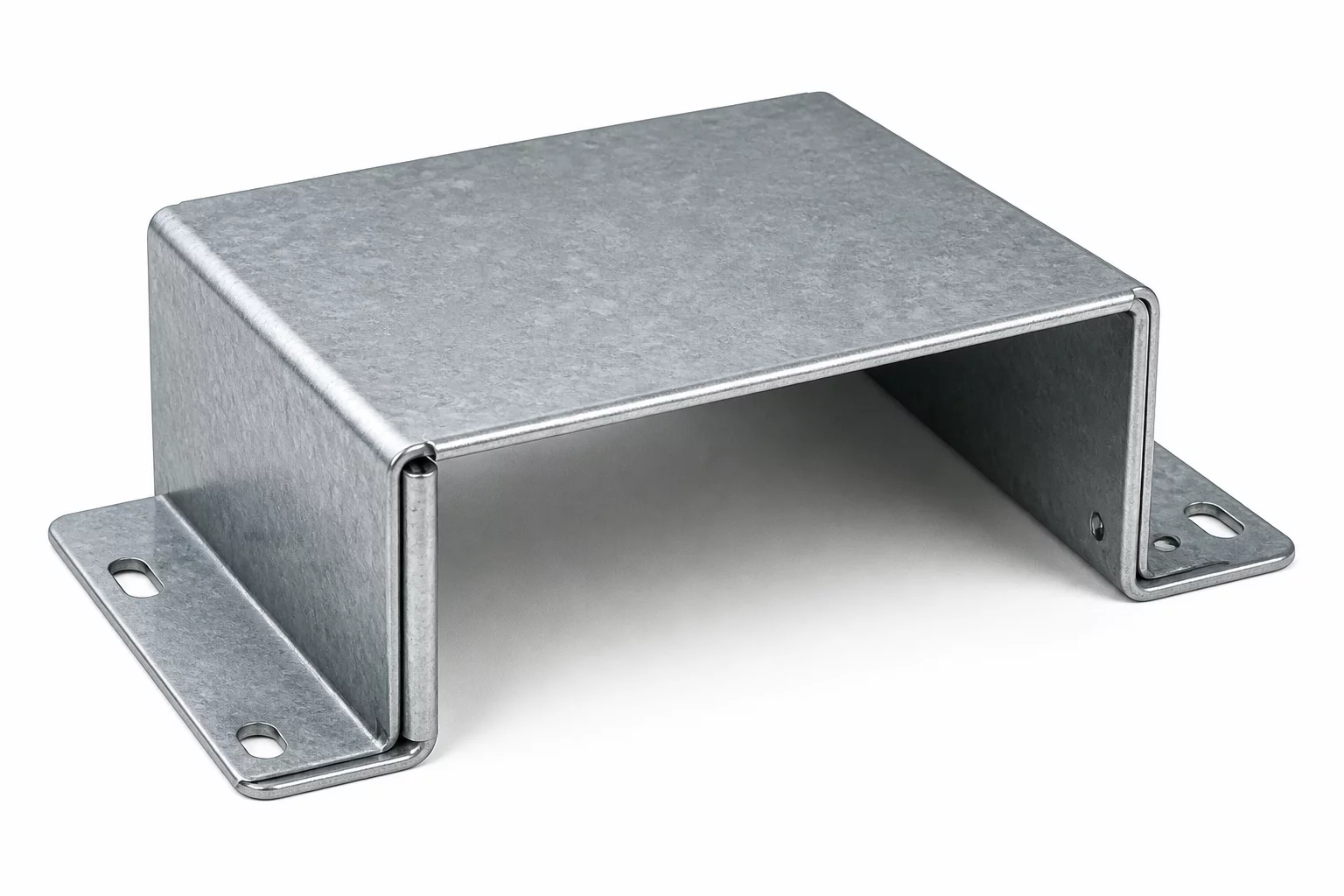
The September 2026 release of Autodesk Fusion delivers an overhaul to the sheet metal workspace, focusing primarily on non-orthogonal bend intersections and complex three-way corner closures. Historically, modeling enclosures with variable flange angles required manual surface splitting or secondary feature cuts to prevent self-intersecting geometry during unfolding. The updated algorithmic core resolves overlapping flange boundaries dynamically, calculating exact clearance offsets while maintaining solid body manifold integrity.
Designers can now specify custom overlap ratios and gap tolerances directly inside the Flange command palette without breaking parametric history. When flange dimensions update upstream, the closure solver adjusts the miter angles automatically, preventing orphaned edge references across downstream assemblies.
Critical Tolerance Warning
When applying zero-gap corner closures on heavy-gauge sheet materials (exceeding 3.5 mm thickness), ensure that the selected bend radius conforms strictly to material elongation tables. The updated solver enforces physical press brake clearance bounds, flagging invalid knife-edge geometries prior to manufacturing handoff.
02 Automated Bend Relief Computation & K-Factor Consistency
Relief generation at transitional flange junctions has been reworked to eliminate tearing risks during press brake air bending. The September update introduces three unified relief profiles alongside granular depth controls:
- Tear Relief Transitions: Generates micro-sheared relief cuts that extend beyond the tangent line of the bend, minimizing mechanical stress concentrations in high-strength aluminum alloys.
- Round & Rectangular Relief Automation: Automatically balances cut-out diameter relative to sheet thickness multiplier rules, ensuring automated laser cutter lead-ins without manual sketch generation.
- Variable Neutral Axis K-Factor Binding: Links unfolding equations to localized bend radii instead of applying a single blanket K-factor across varied tooling sets in the same part.
These procedural rules remain fully associative with the centralized sheet metal rules library, ensuring updates propagate consistently whether parts are edited within top-level assemblies or derived component instances.
03 Downstream Ripple on Flat Pattern Generation & CAM Nesting
Changes in bend relief geometry or corner miter definitions naturally create downstream ripples across drawing sheets and manufacturing setups. In this release, flat pattern extraction synchronizes instantaneously with the 3D folded state, highlighting critical dimension changes and bend centerline shifts without manual pattern regeneration.
For fabrication teams utilizing Fusion Nesting and Fabrication extensions, modified flat contours update cut toolpaths and sheet efficiency ratings immediately. This cohesive data chain removes traditional export steps, safeguarding engineering intent from initial concept through final CNC punch and fiber laser cutting.
Elena Marchetti
Lead ArchitectThe precision engineering workflows and procedural parametric layouts exceeded all preliminary metrics. We integrated the structural model directly into our analysis pipeline with zero geometric conversion losses.